Mid-century modern kitchens celebrate clean lines, functionality and warm woods. Natural tones are punctuated with bolder colours, and geometric shapes add dynamic interest to an otherwise streamlined space.
The mid-century was an iconic era spanning the 1940s through to the 1960s. With organic influences, mid-century style focuses on bridging outdoor and indoor spaces, fusing natural materials with pops of colour, as is found in nature.
Where Did The Mid-Century Kitchen Style Come From?
Most prominent in the United States, mid-century design emerged in the post-war economic boom to meet the need for increased functionality and practicality in an era of modernisation. Formally, kitchens were closed-off spaces, but in response to changing lifestyles, kitchens became more centralised and open spaces within the home, more suitable for family dining and entertaining.
This movement was driven by iconic designers including George Nelson and Charles Eames and was enhanced by technological advancements such as the introduction of built-in appliances.
10 Defining Features Of A Mid-Century Modern Kitchen
Mid-century kitchens all carry their own sense of style and uniqueness, but the core principles remain the same.
1. Light, Open Spaces
Light and openness are key to achieving the mid-century aesthetic that balances this indoor space with the outdoors. Large windows and sliding glass doors can help to let in natural light and open-plan design, as well as open shelving, can open up the space for an airy environment.
2. Clean Lines and Uncluttered Spaces
The mid-century aesthetic calls for clean lines and simplicity. The desired openness hinges on clear, uncluttered surfaces with minimal ornamentation.
3. Organic and Nature-Inspired
Integrated into the sleek formality of mid-century modern kitchens, should be organic elements; natural curves and geometric shapes that offset more regimented, linear lines to bring about balance.
4. Warm, Natural Wood
Favoured for their rich hues, soft grain and natural finishes, oak, walnut and teak are most commonly used in mid-century kitchens. With practicality being a key element of the style, natural woods are used mostly for cabinetry as opposed to worktops and tabletops.
5. Mixing of Materials
Easy to wipe down and durable, laminate is commonplace for countertops in mid-century style kitchens, whilst stainless steel is traditionally chosen for appliances and decorative hardware, although matte black and brushed brass can also feature. This merging of metals and woods within the space adds a layered feel and offers focal points that add interest.
6. Blocks of Bold Colour
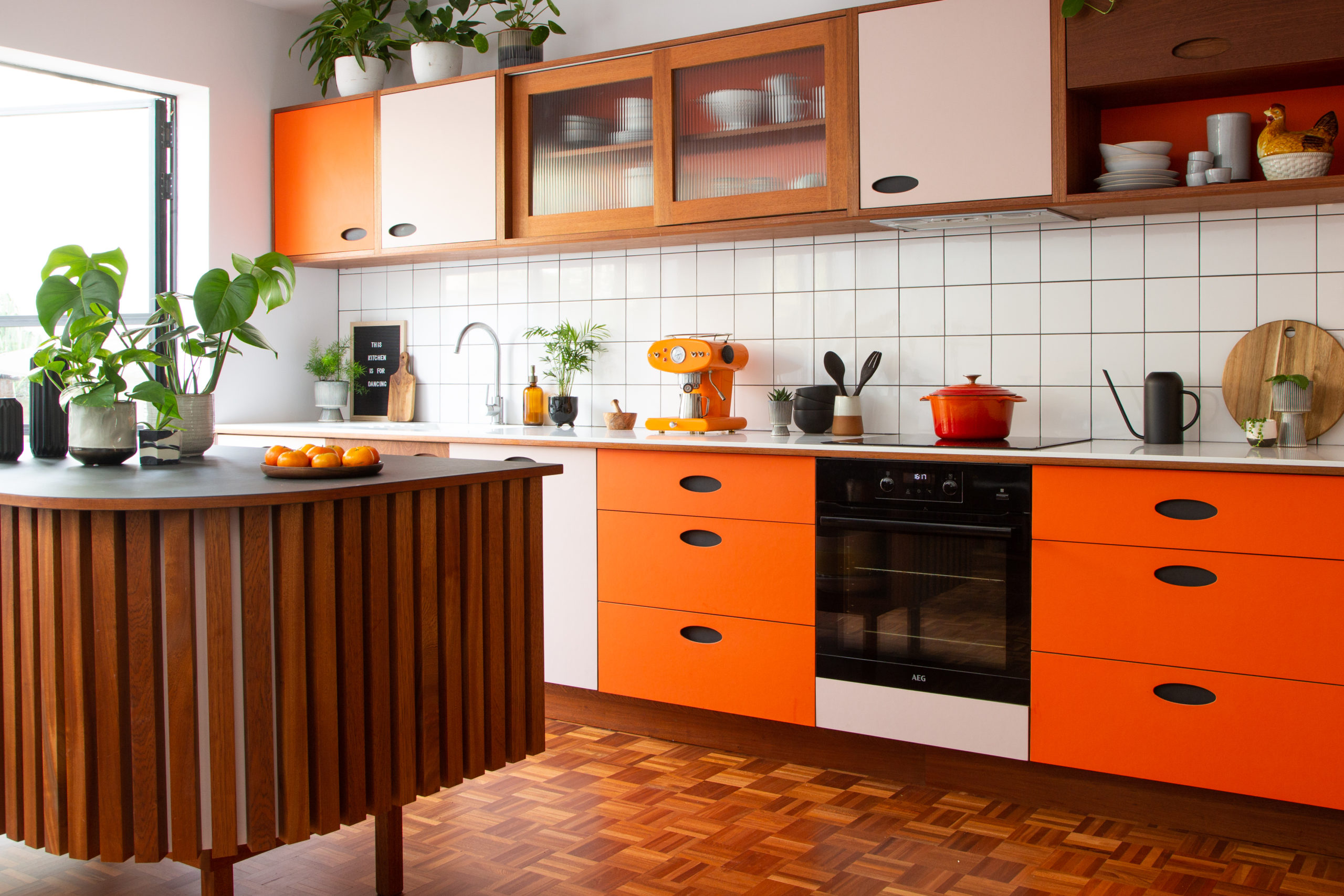
Whilst not an absolute must for mid-century, bold blocks of colour do feature and, dare we say, are encouraged. Primary colours and warm earthy tones are used to create blocks of vibrancy alongside more muted off-white backdrops and natural woods. Note how deep blue is used to add depth to the Maseru kitchen, and how retro orange cabinets celebrate the origins of mid-century in our Enugu kitchen.
7. Geometric Patterns
Much like colour blocking, geometric patterns may also be incorporated into a mid-century kitchen, if desired. A later 1960s influence in the mid-century movement, geometric patterns introduced a more modern element at the time, but now add a retro feel.
8. Detailing and texture
The clean lines of mid-century design create space for mixed textures and detailing, often combining flat or slab cabinet doors with slatted wood features, fluted glass, or furnishings with tapered legs. These flourishes can add depth and interest to the space but must not distract from the overall openness and simplicity of the style. To achieve this, restraint should be exercised, as demonstrated in our Kinsasha mid-century kitchen, where we used slatted oak as an accent to add warmth alongside clean lines and smooth, flat surfaces.
9. Integrated Appliances and Retro Features
The mid-century style was largely driven by technological advances that enhanced functionality. Therefore, integrated appliances were key to this movement and remain a staple of mid-century modern style today. However, retro refrigerators and vintage-inspired cookers and worktop appliances are often featured in modern takes on this style, giving a nostalgic nod back to the era from which this aesthetic was born.
10. Practical Storage
Simplicity and functionality are key to the mid-century modern kitchen. Therefore, you need smart storage solutions that leave surfaces uncluttered. Kitchen islands keep the space open with a centralised gathering point but also provide ample additional storage space. Integrated appliances also allow for cabinets above and below for accessibility and maximisation of storage space.
Mid-Century vs Modern vs Retro Kitchens: What’s The Difference?
| Mid-century | Modern | Retro | |
|---|---|---|---|
| Overall aesthetic | Warm and functional with clean lines, organic curves and tapered details. | Sleek, streamlined and minimal, with seamless, handleless fronts and uncluttered surfaces. | Playful and nostalgic, drawing on 1950s diner style with rounded forms and bold statement pieces. |
| Materials | Teak, walnut, oak and rosewood, laminate, stainless steel, matte black, brass accents. | High-gloss or matte lacquer, quartz, stainless steel, glass and concrete. | Chrome, vinyl, laminate, checkerboard flooring and enamel-finish appliances. |
| Colour Palette | Warm woods and mostly neutral tones, with bold blocks of mustard, olive, teal and burnt orange. | Monochrome and neutral: whites, greys and black, often with metallic accents. | Saturated pastels and brights such as mint, baby pink, butter yellow and cherry red, often with black and white. |
| Suited to | Those who value design heritage, functionality, and want to connect their indoor space with the outdoor space. | Those who want a clean, low-fuss space with integrated technology and a contemporary edge. | Those who enjoy personality and fun, and want a kitchen that makes a statement. |
Is A Mid-Century Kitchen Right For Your Home?
Deciding whether mid-century is going to work for your kitchen begins with reviewing the space you have to work with. Mid-century style demands light and bridges the indoor and outdoor world, so if your kitchen isn’t connected to an outside area or if natural light is limited or absent, you might need to reconsider. Space is a key feature of mid-century, but if you’re using a kitchen designer like Wood Works, then we have some creative ways to open up space even in smaller kitchens.
Mid-century kitchens demand uncluttered surfaces but are not as minimalist as Japandi kitchens. Materials commonly used in mid-century modern kitchen design are also functional and low-maintenance. The style is simple and connects outdoor and indoor spaces together for a timeless feel and an organic aesthetic that you can opt to punctuate with bold colours or geometric patterns, if you so wish.
Not sure if mid-century modern is right for your home? Scroll through some of Wood Work’s mid-century kitchen designs to see a few different interpretations of the style.
FAQs
What colours are used in a mid-century modern kitchen?
Although large spaces are predominantly neutral and light in mid-century modern kitchens, many also use bold retro accent colours including teal, orange, mustard and avocado.
What materials suit a mid-century kitchen?
Cabinets tend to be made from natural woods including oak, teak and rosewood in mid-century kitchens. For countertops, laminate is common. White and multi-colour terrazzo also worked beautifully for our Embu kitchen. Brass and stainless steel metals are often seen in mid-century design.
Is a mid-century kitchen still in style?
Mid-century modern is timeless. Mid-century kitchen spaces blend contemporary style with touches of nostalgia, the outdoors with the indoors, and create an open, welcoming space for friends and family to come together, and that will never go out of style.
Let’s Talk Ideas For A Mid-Century Modern Kitchen
If you’re a fan of mid-century modern style, then we can help bring this into your home. We create and fit bespoke, handmade kitchens, tailored to your needs and your style. Get in touch with Wood Works to talk through your ideas for a mid-century modern kitchen.
